

Description
Learn To Die is a bold new step for a group of musicians, artists, and writers that has at least nominally been considered a punk band. A stylistic overhaul. For those who have been following along, itll carry some surprises.
Slender began over a decade ago as a semi-improvisational cassette recording project, a casual collaboration between a few friends that was initially documented by two self-titled cassette-only releases released in 2014 and 2015 respectively, now both unavailable and out of print. Most fans, however, will know Slender for their two most recent releases, Walled Garden (2017) and Time On Earth (2019), both released on the tastemaking London art-punk label La Vida Es Un Mus.
Their prior work has earned them comparisons to anarcho-punks Crass and The Snipers, lo-fi flagbearers Swell Maps and Pink Reason, and artrockers Cromagnon and Amon Dl. Here, however, such comparisons feel largely unfounded and the band feels somewhat peerless. Moments of artpunk brutalism, lo-fi experimentalism, and kosmiche detours grace the fabric of Learn To Die, but the album reaches for more than pastiche. Teasing the rarified worlds of chamber music and musique concrete, Slender manages something intangible and strange. A vocoded voice intones multi-lingual poems alongside tinny guitars and sampled strings and flutes. Three chord janglepunk anthems arise suddenly out of a cosmic mist crafted by analogue synths reciting the poetry of machines. The album moves in ways reminiscent of works by artists as varied and singular as Nobukazu Takemura, Chuquimamani-Condori, Coil, and Robert Wyatt, but it doesnt necessarily occupy the same realm as any of them.
Time On Earth challenged definitions of lo-fi, teasing the aesthetic principle by capturing barebones arrangements, clipped and buzzy instrumentation, and oddly rickety performances with an unlikely clarity. Here, however, the band has only a tenuous relationship to lo-fi, appropriating the aesthetic as a texture among many and folding it into the albums crystal clear totality. Walled Garden explored the uncanny nonspace that could be created through unconventional layering and analog recording methods. Time On Earth sought to create a world of its own by synthesizing those methods with a more professionalized digital approach. Now, that world is ravaged, its constituent parts are reconstructed towards something vaporous, hardly tethered to our world at all.
Learn To Die arose from a practice of vast collaboration and heavy deliberation, hosting a seemingly endless list of credits. As the album took shape over the course of two-and-a-half years, Slender expanded to include a broader creative community. Friends and family lended instrumentation, mix and composition notes, lyrics, and translations. As the album grew, it took on a polyvocal quality, becoming ineffable in its multitude.
Rather than a single creative approach or aesthetic principle, Slender is bound by a spirit of creation, interconnection, and exploration. That spirit informs Learn To Die at almost every level. Two of the albums earliest tracks reference purple light as something more than a visibility aid. The band describes purple light as a communal phenomenon of something like ecstatic spirituality, a feeling of true connection that not only inspired the songs that make mention of it, but the process of making the album altogether.
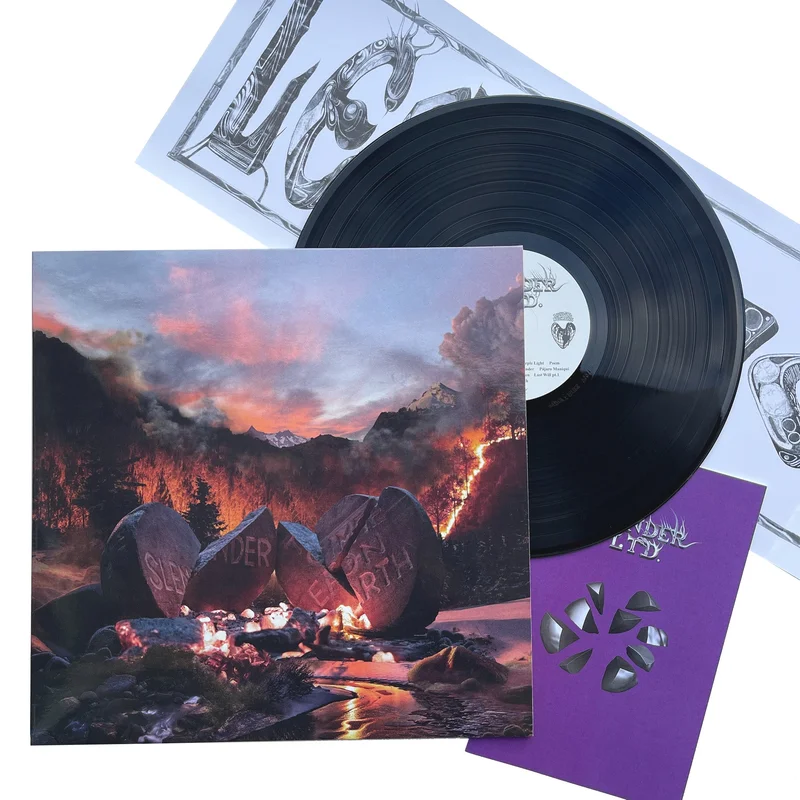
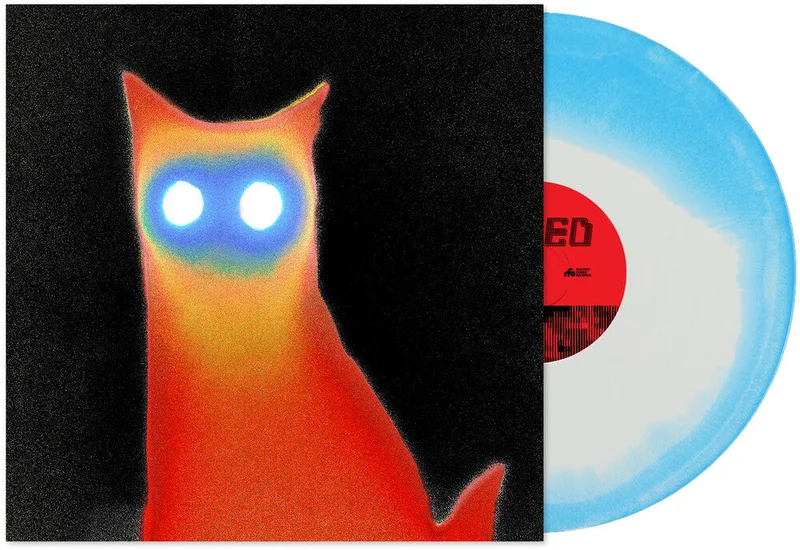
But Slender isnt only about joy and good in life. The album is, after all, titled with its eyes fixed on death, a facet underlined by the apocalyptic imagery on its cover. Learning to die: its a practice that requires serious commitment, space, and openness. The band states that lots of struggle and loss surrounded us as this album began to unfold and develop. Amidst the creative process they found immediate reminders that life inevitably ends. If purple light is life stuff at its most fully realized, perhaps dying is in the moments between. As Slender has it: We choose to float to our deaths, not fall. — Leah B. Levinson
Our take: After two records on La Vida Es Un Mus, this New York project moves to Digital Regress Records for their second album. It seems like an appropriate move given the defiantly eclectic and experimental direction theyre moving in, which seems to have as much to say to the worlds of chamber music and fine art as DIY punk shows and limited edition 7s. I could spend a couple thousand words touching on all the different styles and sounds Slender tackles over the course of Learn to Die and still come nowhere near doing it justice. Suffice to say theres a lot of music here, and you never know what the next momentmuch less the next songwill hold, with drastic changes in genre, tone, production methods, and just about everything else keeping Learn to Die in constant flux. Yet it doesnt sound scattered. The labels lengthy but evocative description puts it really well when they note it has a polyvocal quality, like it was created by a village full of artists rather than just a small group. Fans of strange and eclectic albums like Comuss First Utterance, Cathedrals Forest of Equilibrium, or Royal Truxs Twin Infinitives will get the most out of this dense and demanding but exciting musical journey.
Reviews
There are no reviews yet.